Why rent a dumpster?
Whether you are renovating your home, cleaning out a garage, replacing a roof or running a construction site, a roll-off puts all the debris in one place instead of making trip after trip. The payoff is faster cleanup, lower transport costs, a safer job site and a rental period that fits your schedule. Home remodels in particular make more debris than most people expect — drywall, flooring, cabinets and old fixtures pile up fast — and roof replacements, estate and property cleanouts, and construction and demolition all fill a box quicker than a trailer.
How a roll-off rental works
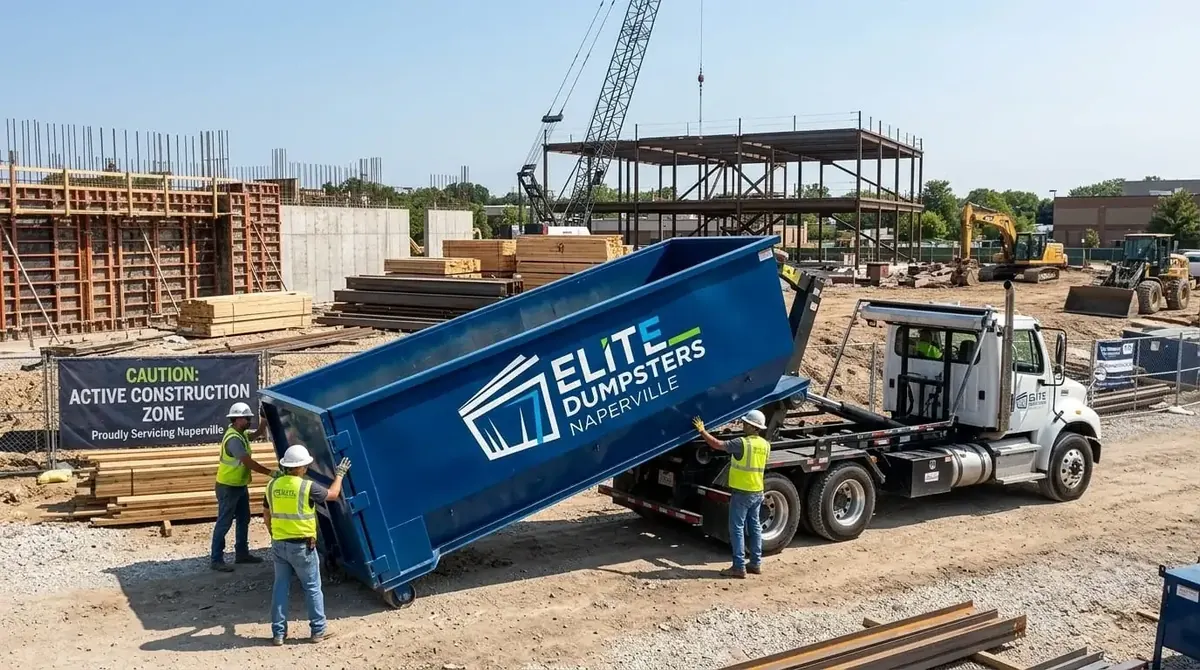
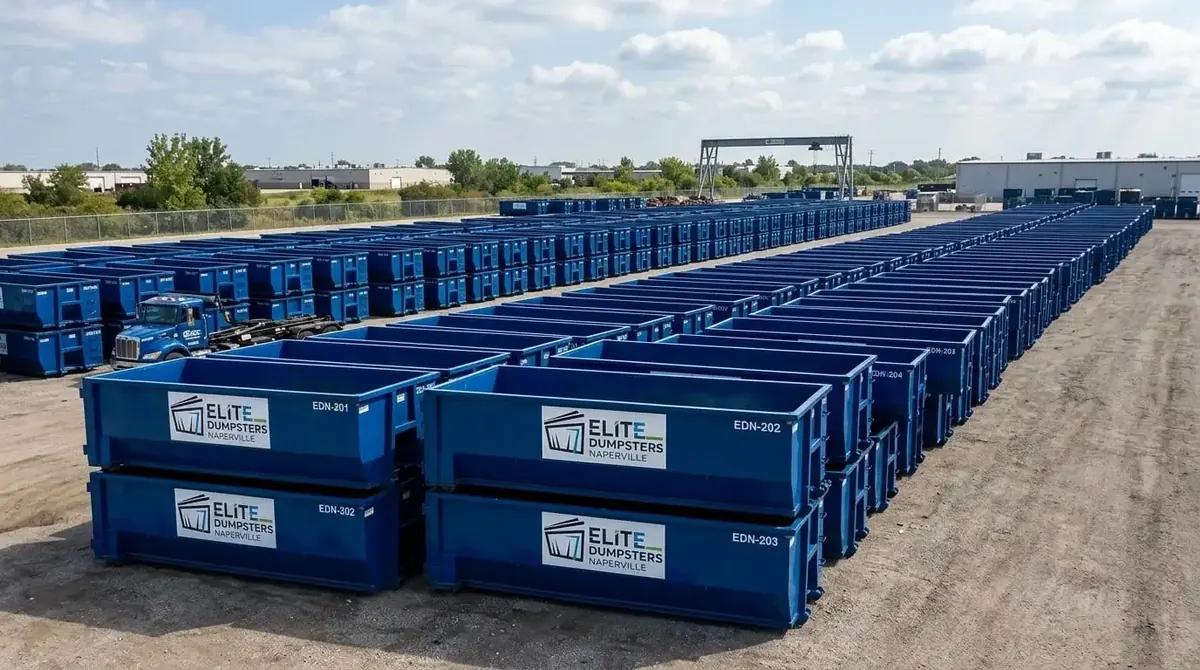
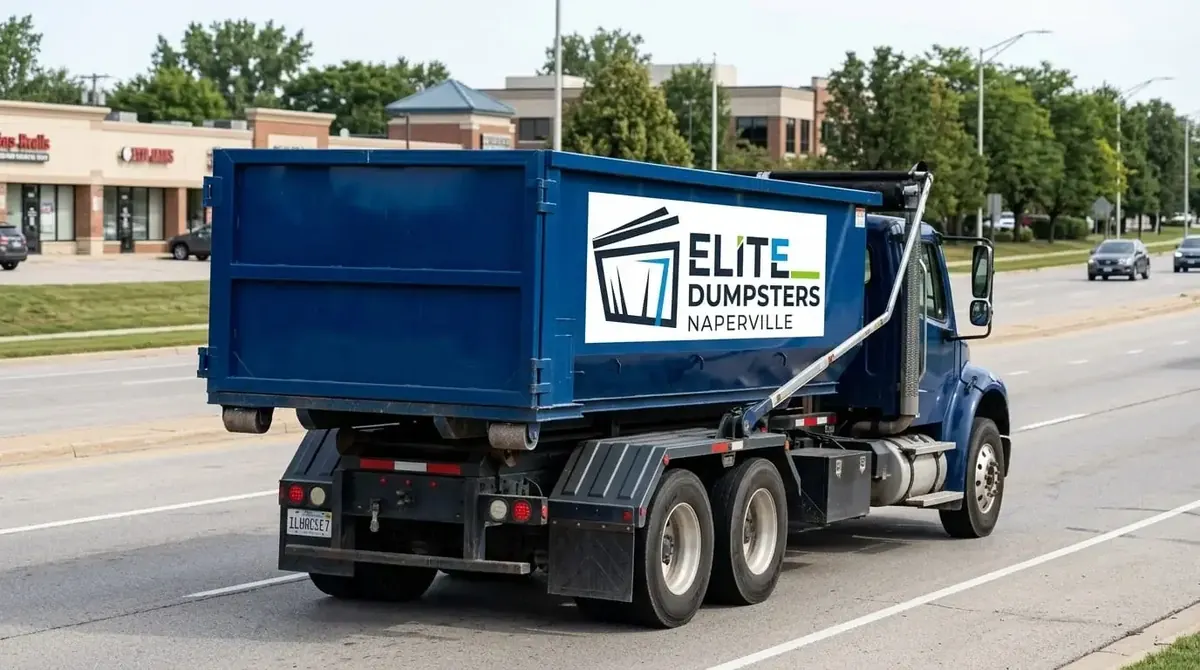
You call, tell us about the job and the address, and pick a size with our help. You get a flat price that covers delivery, pickup and disposal up to a stated weight allowance, for a standard rental period of 3 to 7 days. We deliver — often the same or next day — on a truck that rolls the container off onto your driveway, curbside spot, job site, commercial property or parking lot. You fill it at your own pace, keeping debris level with the top rim, and call when you are done. As long as we have clear placement instructions, you do not need to be there. Our yard is at 588 W 5th Ave in Naperville, about a mile from the Municipal Center, so most of the city is a short run.
Choosing a size
Start with the job, then check the weight. A 10 yard, about 14 feet long, suits garage and attic cleanouts, small remodels, yard debris and heavy material. A 15, about 16 feet, suits bathroom renovations, flooring removal, small roofing jobs and decluttering. The 20, 30 and 40 share a 22-foot footprint and get taller: the 20 for kitchen remodels, large cleanouts, deck removals and medium construction — our most popular size; the 30 for major renovations, commercial cleanouts, large roofs and new construction; the 40 for commercial construction, large demolitions and major property cleanouts. Included weight runs from about 1–2 tons on a 10 to 5–6 tons on a 40. The sizing guide has the full table.
What Groot collects in Naperville, and what it does not
The City of Naperville contracts with Groot for household trash, recycling and yard waste, paid through a monthly refuse fee on the utility bill. Carts go out by 6 a.m. and come in by 7 p.m. Groot takes two bulk items a week free and one appliance a week if you call first. Construction debris is limited: two rolls of carpet a week (4 by 2 feet, 60 pounds each), and drywall or paneling in no more than two 32-gallon cans, two bundles, or one of each per week. "Tires, hazardous liquids and landscape materials are banned from landfills and cannot be collected with normal trash." Yard waste goes out separately, March 15 to December 15, with a sticker on every bag or bundle.
That is why a roll-off is the normal answer for a remodel, a roof, a cleanout bigger than two bulk items, or a construction site. Questions about Groot service go to Groot at (630) 892-9294.
Placement and permits in Naperville
On your own driveway we found no City permit for a roll-off. On the street, parkway, alley or sidewalk, the City requires a Right-of-Way permit, filed through its Civic Access portal with a map showing where the dumpster will sit: $88, or $120 if part of the street is closed, plus a $5,000 maintenance bond and about 14 calendar days of review. The code keeps at least 18 feet of roadway usable and calls for warnings, barricades and lights where needed. If you want extra protection for the driveway, lay plywood or boards under the wheels. The permit guide covers the other 16 towns we serve.
Demolition, the historic district, and who may haul
A one- or two-family demolition permit in Naperville is $1,045, including plan review, site signage and two inspections (§ 1-9H-1.3.4). The City's conditions say the owner must "promptly and properly dispose of all demolition debris," keep it from blowing and never burn it — and the Right-of-Way permit is issued with the demolition permit. In the downtown historic district, designated in 1986, demolition needs a Certificate of Appropriateness, and the City says total demolition "is highly discouraged." For larger regulated projects, Illinois EPA wants asbestos notice 10 working days ahead with a $150 fee; homes of four or fewer units are exempt.
Naperville licenses commercial scavengers under § 4-2-4, but its definition of commercial waste excludes "temporary construction roll off containers," and the code does not say plainly whether a construction roll-off needs the licence. We hold ours. Illinois has no general state licence for roll-off haulers that we could find.
Outside the city line
Naperville sits in both DuPage and Will counties, and neither county shows a dumpster or hauler licence for unincorporated areas, so the rules come down to each town. Most neighbors run a single residential contract — Groot in Warrenville, Glen Ellyn, West Chicago, Woodridge, Aurora, Batavia and North Aurora; LRS in Lisle, Wheaton and Montgomery — and many license other haulers. Lisle says only Lisle-licensed haulers may haul there; Glen Ellyn lets construction debris go to any Village-licensed scavenger; Woodridge exempts contractors hauling their own job debris. We hold the licence in every town we serve. Each town has its own page — see the service area.
What goes in, what stays out, and how to save
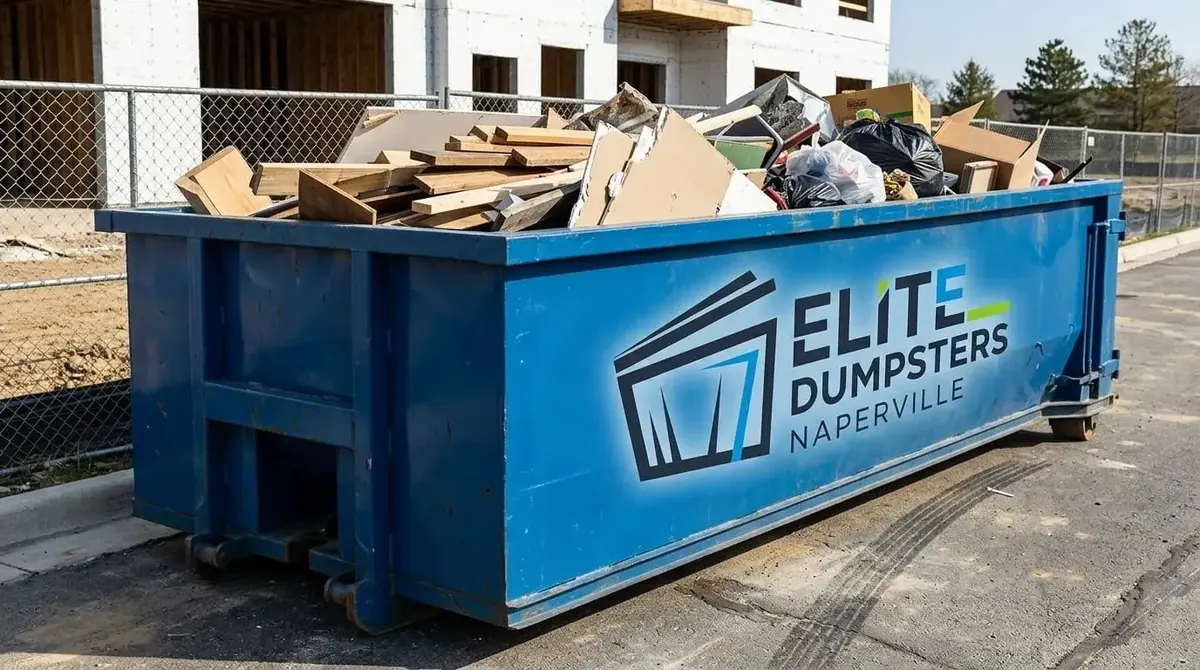
In: wood, drywall, tile and flooring, furniture and household junk, roofing shingles, yard waste and branches (in a load of their own), small appliances, and concrete or dirt in a 10 or 15. Out, by Illinois landfill bans: tires, lead-acid batteries, motor oil, appliances that still have their refrigerant or mercury parts, and — since January 1, 2026 — TVs, computers, monitors, printers and other covered electronics. Out of our boxes as well: paint, solvents and oils, hazardous chemicals, gas cylinders and propane tanks, medical waste and asbestos. The full guide says where each goes instead.
To save money: choose the right size so you do not need a second haul, have the debris ready before delivery, avoid overloading, and separate recyclable material. We work with local disposal and recycling facilities to keep metal, yard waste and certain construction debris out of the landfill where possible.
Loading, pickup and booking
Load evenly and keep everything level with the rim — an overfilled dumpster cannot be safely transported. Spread heavy material across the floor rather than at one end, and break down big items. Keep the path clear for pickup. Call before the pickup date if you need more time; we extend at a simple daily or weekly rate.
To book, call (630) 864-6143, 24 hours a day, 7 days a week. Have the address, the material and a rough quantity ready. Call early in the day for the best chance of same-day delivery. You will have a flat price before you hang up, and payment by credit or debit card secures the delivery date.